
7 Stages of Lewy Body Dementia: A Caregiver’s Guide
Lewy body dementia (LBD) is a distinct clinical entity, separate from Alzheimer’s disease and vascular dementia. It is defined by the presence of abnormal protein deposits, called Lewy bodies, in the brain tissue. These deposits disrupt the brain’s chemistry, affecting thinking, movement, behavior, and mood. While memory loss is a feature, it is often not the first or most prominent symptom, which distinguishes LBD from other common forms of dementia.
The diagnosis rests on a specific triad of symptoms that often appear together. First, cognitive fluctuations involve pronounced variations in attention and alertness. A person may be clear-headed one hour and confused the next. Second, recurrent visual hallucinations are common, where individuals see detailed people, animals, or objects that are not there. Third, parkinsonian motor symptoms include stiffness, slowness of movement, and tremors, similar to those seen in Parkinson’s disease.
Because these symptoms overlap with other conditions, LBD is frequently misdiagnosed. The variability of symptoms—especially the day-to-day cognitive shifts—can be mistaken for psychiatric issues or delirium. Understanding this unique clinical profile is essential for caregivers, as it dictates the specific staging and care strategies required for the seven stages of progression.
Managing symptoms at each stage
Lewy body dementia progresses differently for everyone, but the seven-stage model offers a roadmap for anticipating needs. The goal is not to stop the decline, but to adapt the care environment to match the person’s changing abilities. By focusing on practical adjustments rather than medical definitions, you can reduce distress for both the caregiver and the patient.
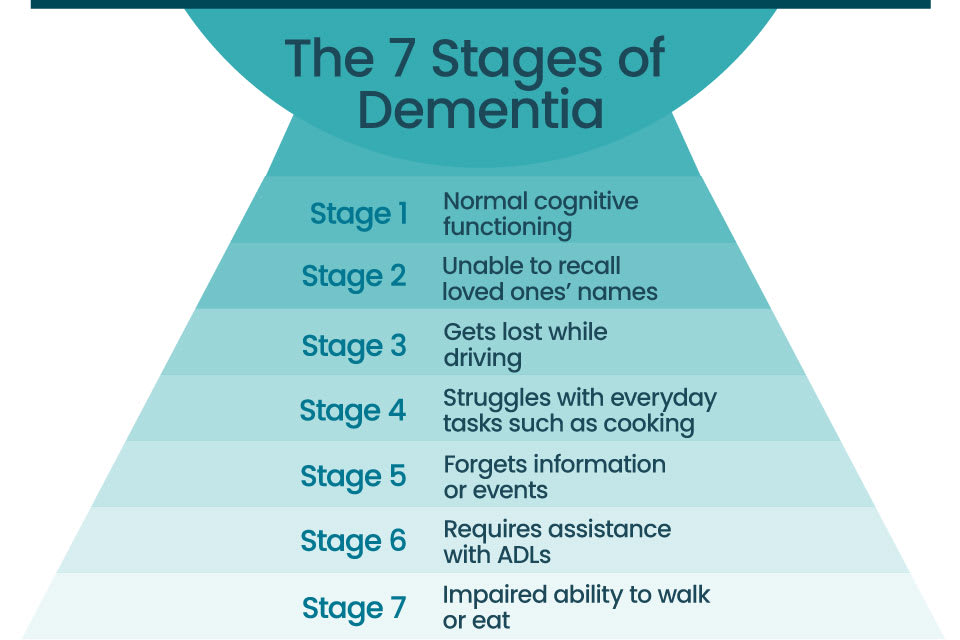
Stage 1: Early confusion
In the initial stage, memory lapses and mild cognitive changes often mimic normal aging. The primary task is establishing a baseline. Keep a simple journal of daily routines and note any recurring issues, such as getting lost in familiar places or forgetting recent conversations. This documentation helps doctors distinguish between typical age-related changes and early Lewy body symptoms. Early diagnosis allows time to plan legal and financial affairs while the person can still participate in decisions.
Stage 2: Increasing forgetfulness
As memory loss becomes more noticeable, the person may struggle with complex tasks like managing finances or planning meals. Simplify the home environment by removing clutter and labeling drawers. Use a large, easy-to-read calendar to track appointments. Encourage the person to stick to a consistent daily routine, which provides a sense of security and reduces anxiety. At this stage, safety remains manageable with minor adjustments, such as locking away hazardous items.
Stage 3: Moderate cognitive decline
Hallucinations and visual disturbances often emerge in this stage. These symptoms can be frightening, so respond with calm reassurance rather than arguing about reality. If the person sees or hears things that aren’t there, validate their feelings without confirming the hallucination. For example, say, "I understand you see someone there, but I don't see anyone. You are safe here." Ensure good lighting to reduce shadows that might trigger false perceptions.
Stage 4: Significant impairment
Personality changes and mood swings become more pronounced. The person may become paranoid, anxious, or apathetic. Maintain a calm demeanor and avoid overstimulating environments. Break tasks into small, manageable steps. If agitation occurs, identify potential triggers such as pain, hunger, or fatigue. Regular physical activity, even a short walk, can help regulate mood and improve sleep patterns.
Stage 5: Severe cognitive loss
Memory gaps widen, and the person may forget personal history or family members. Communication shifts from words to gestures and tone. Speak slowly and clearly, using simple sentences. Focus on non-verbal connection: hold hands, smile, or play familiar music. Routine care tasks like bathing and dressing require more assistance. Offer choices between two simple options to preserve a sense of autonomy.
Stage 6: Advanced dependency
Physical abilities decline significantly. The person may need help walking, sitting, or controlling bladder and bowel functions. Implement safety measures to prevent falls, such as grab bars and non-slip mats. Monitor for signs of discomfort, as the person may no longer be able to articulate pain. Regular repositioning is essential to prevent pressure sores. Nutrition becomes a focus; ensure soft, easy-to-swallow foods and adequate hydration.
Stage 7: End-stage care
In the final stage, the person becomes fully dependent on others for all care needs. Mobility is severely limited, and speech is often lost. Focus on comfort and dignity. Provide gentle touch, play soothing music, and maintain a quiet, peaceful environment. Swallowing difficulties may require dietary adjustments or feeding tubes, a decision that should be guided by the person’s previously stated wishes and medical advice. Palliative care specialists can help manage symptoms and support the family through this difficult period.
Recognizing Red Flags for Medical Intervention
Caregivers play a critical role in monitoring the progression of Lewy body dementia. While some symptoms fluctuate naturally, certain changes signal that the current care plan is no longer sufficient or that immediate medical attention is required. Distinguishing between normal disease progression and acute medical crises can be difficult, but recognizing these specific triggers ensures timely support for both the patient and the caregiver.
A sudden worsening of hallucinations or delusions often indicates an underlying medical issue rather than a typical dementia flare-up. Infections, such as urinary tract infections or pneumonia, frequently manifest as acute confusion or psychosis in LBD patients. If visual hallucinations become distressing, frequent, or dangerous, contact a healthcare provider immediately. The National Institute on Aging notes that these symptoms can be managed with medication adjustments, but only after ruling out physical causes.
Physical safety is another primary concern. Falls, frequent wandering, or significant changes in mobility require prompt evaluation to prevent injury and identify potential orthostatic hypotension or medication side effects. Additionally, severe fluctuations in alertness—where the patient becomes unresponsive or excessively sleepy for prolonged periods—warrant urgent assessment to rule out stroke, seizure activity, or severe dehydration.
When to Call the Doctor
Use this checklist to determine if a symptom requires professional intervention.
- Sudden change in behavior: Aggression, extreme agitation, or new-onset paranoia.
- Physical decline: Unexplained falls, inability to stand, or significant weight loss.
- Medical symptoms: Fever, signs of infection, or difficulty swallowing.
- Medication issues: Severe side effects from current prescriptions or lack of efficacy.
Safety and Emergency Situations
Not all changes require a scheduled appointment. Some symptoms demand immediate emergency care. Call 911 or go to the nearest emergency room if the patient experiences:
- Chest pain or difficulty breathing.
- Signs of a stroke (face drooping, arm weakness, speech difficulty).
- Seizures or loss of consciousness.
- Severe head injury from a fall.
Early intervention can prevent hospitalization and improve quality of life. Keep a log of symptoms, including when they started and their severity, to help your doctor make accurate diagnoses.
Frequently asked: what to check next
Work through Navigating the 7 Stages of Lewy Body Dementia


No comments yet. Be the first to share your thoughts!