
7 Understanding Dementia: A 7-Stage Guide to Care and Support
Understanding Dementia works best as a clear sequence: define the constraint, compare the realistic options, test the tradeoff, and choose the path with the fewest hidden costs. That order keeps the advice usable instead of decorative. After each step, pause long enough to check whether the recommendation still fits the reader's actual situation. If it depends on perfect timing, unusual access, or a best-case budget, include a simpler fallback.
The simplest way to use this section is to write down the real constraint first, compare each option against it, and choose the path that still works outside ideal conditions.
What dementia actually means
Dementia is not a single disease. It is an umbrella term for a group of symptoms that affect memory, thinking, and social abilities severely enough to interfere with daily life. Think of it like "fever": fever isn't a specific illness itself, but a sign that something else is going on in the body. Similarly, dementia signals that underlying conditions are impacting the brain.
For caregivers, this distinction is important because it shapes what you can expect. While memory loss is a hallmark of many forms, some types of dementia primarily affect personality, movement, or language first. Progression also varies widely from person to person. Some individuals may decline steadily over a few years, while others may remain stable in one stage for a long time before moving to the next.
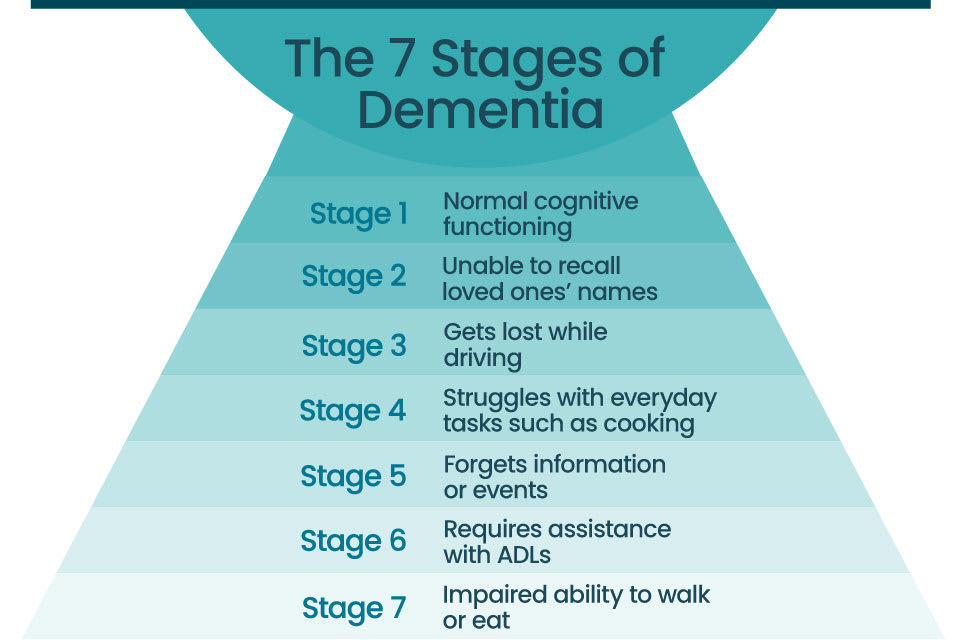
The 7-stage model we use in this guide provides a general framework for understanding how these changes unfold. It helps you anticipate needs and adjust your support strategies. However, it is not a strict timeline. Every person’s journey with dementia is unique, and the stages should be viewed as a guide rather than a rigid rulebook.
Practical steps for daily care
Supporting someone through dementia is about adapting your environment and communication style to match their changing needs. Progression varies by individual, so these steps serve as a flexible guide rather than a rigid script. The goal is to reduce confusion and maintain dignity.

Remove tripping hazards like loose rugs and clutter. Keep pathways clear and ensure lighting is bright, especially in hallways and stairwells. Label cabinets and drawers with clear pictures or words to help the person find essentials without frustration.
Predictability reduces anxiety. Try to keep meal times, bathing, and bedtime on a similar schedule each day. A consistent rhythm helps the brain anticipate what comes next, providing a sense of security and stability.
Speak slowly and use simple sentences. Ask one question at a time and allow plenty of pause for a response. If words fail, rely on tone, facial expressions, and gentle touch to convey calm and reassurance.

Install grab bars in bathrooms and use non-slip mats. Consider door alarms if wandering becomes a concern. Encourage gentle movement when safe, as physical activity supports both mobility and mood.
Use pill organizers or automated dispensers to prevent missed or double doses. Keep a current list of medications and appointments accessible to all caregivers. Regular check-ups help catch changes early.
Keep familiar objects, photos, and music nearby. These anchors to the past can provide comfort when the present feels confusing. Engage in simple activities they once enjoyed, like folding laundry or listening to old songs.

Caregiving is a marathon, not a sprint. Take regular breaks, seek support from groups, and prioritize your own health. You cannot pour from an empty cup; your well-being is essential to the care you provide.
Caregiver checklist and resources
Caring for someone with dementia is a marathon, not a sprint. To keep your support steady and prevent burnout, use this weekly checklist to cover the essentials without getting overwhelmed. Think of it as a safety net that catches the details so you can focus on connection.
- Medication management: Verify that prescriptions are filled and organized. Use a pillbox or set reminders to ensure doses are taken on time.
- Appointment scheduling: Confirm upcoming doctor visits, therapy sessions, and social engagements. Keep a dedicated notebook for notes and questions.
- Safety checks: Inspect the home for tripping hazards, ensure proper lighting, and verify that emergency contacts are accessible.
- Nutrition and hydration: Prepare balanced meals and keep water bottles visible. Monitor for signs of dehydration or weight loss.
- Caregiver self-care: Schedule at least 30 minutes daily for yourself. This could be a walk, a hobby, or simply resting without interruption.
Support is available when you need it. Organizations like the Alzheimer’s Association offer local support groups, respite care referrals, and educational materials. You don’t have to navigate this journey alone.
-
Review medication schedule and refill prescriptions
-
Confirm next week’s medical and social appointments
-
Inspect home for safety hazards (rugs, lighting, cords)
-
Plan nutritious meals and ensure hydration supplies
-
Schedule one hour of personal rest or activity
Remember that progression varies by individual. This checklist is a flexible tool, not a rigid rulebook. Adjust it as your loved one’s needs change, and always prioritize your own well-being to sustain your care.

No comments yet. Be the first to share your thoughts!