
Understanding the Final Phase
Recognizing the signs that a loved one with dementia is nearing the end of life is difficult. It’s a time filled with emotion, and it’s natural to feel overwhelmed. This is about shifting focus to providing comfort and support during a limited time.
The dying process with dementia varies. There’s no single timeline, and the experience differs from person to person. Some individuals decline rapidly over a few weeks, while others fade more gradually. Avoid comparing your loved one’s journey to others.
Being aware of these potential signs allows you to prepare emotionally, make meaningful goodbyes, and ensure your loved one’s final wishes are honored. We’ll focus on observable changes—things you can see and feel—rather than attempting to make medical diagnoses. This knowledge helps you advocate for your loved one’s comfort and dignity.
This guide covers ten key signs, offering explanations and practical advice. It’s about being present and providing compassionate care, even when it’s challenging. You are not alone in this.
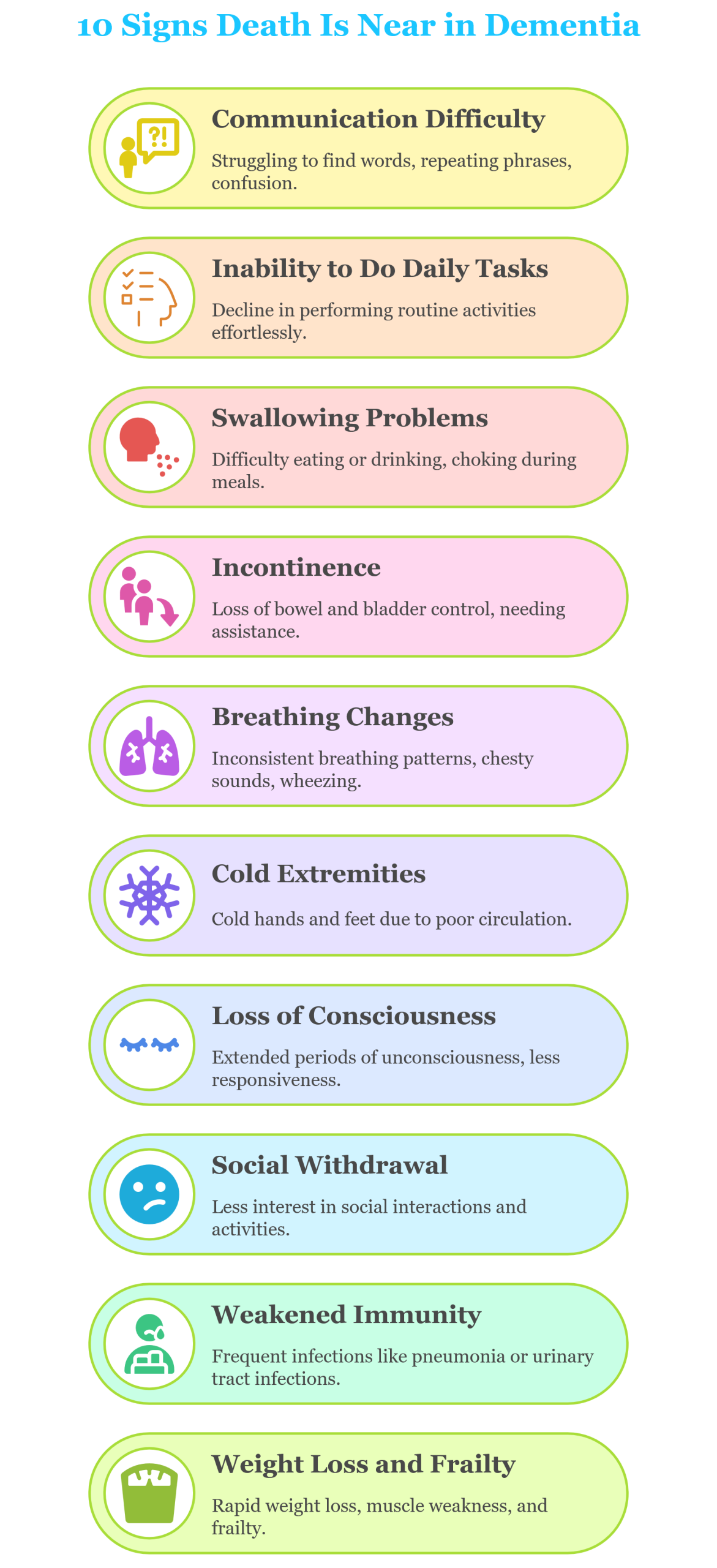
The Ten Signs: A Detailed Look
As dementia progresses, the body begins to shut down, leading to observable changes. These aren’t necessarily signs of suffering, but natural consequences of organ system decline. Here’s a look at ten common indicators that death is near.
Increased Sleep: A significant increase in sleep is often one of the earliest signs. Your loved one may sleep for longer periods throughout the day and night, becoming less responsive when awake. This happens as the body conserves energy and metabolic processes slow down. It's not a restorative sleep; it's a sign the body is preparing for the final stage. Respond by minimizing disturbances and creating a peaceful sleep environment.
Decreased Appetite and Fluid Intake: As the body’s needs change, the desire to eat or drink diminishes. This isn't always about nausea or discomfort; it's a natural reduction in the body's demand for nourishment. Trying to force food or fluids can cause distress. According to Suncrest Hospice, offering small sips of water or ice chips for comfort is acceptable, but don’t be alarmed by a significant decrease in intake. Focus on mouth care to maintain comfort.
Withdrawal from Social Interaction: A person with dementia may become increasingly withdrawn, losing interest in activities they once enjoyed and interacting less with family and friends. This isn’t a rejection of loved ones, but a consequence of the disease affecting the brain’s ability to process social cues. Don’t take it personally. Continue to offer gentle companionship, even if there’s no verbal response.
Confusion and Disorientation: Confusion and disorientation, common throughout dementia, often worsen in the final stages. The person may not recognize familiar faces, places, or events. They might ask repetitive questions or become agitated due to their inability to understand what’s happening. Reassure them gently and avoid trying to correct their misconceptions. A calm and familiar environment can help.
Changes in Breathing: Breathing patterns often change, becoming irregular or shallow. According to the Alzheimer’s Society, this can manifest as periods of rapid breathing followed by periods of slow, shallow breaths. This is due to changes in the brain’s control of breathing. Positioning the person comfortably, with their head elevated, can help ease breathing. This change can be frightening to witness.
Physical Weakness: Increasing physical weakness is a hallmark of the final stages. The person may become unable to sit up, walk, or even hold their head up. This is a result of muscle wasting and overall decline in physical function. Provide gentle support and assistance with mobility, but avoid forcing movement. Crossroads Hospice notes that this weakness is often progressive.
Increased Pain: While not always present, pain can become more pronounced in the final stages. It can be difficult to assess pain in someone with dementia who can’t verbally communicate. Look for non-verbal cues like grimacing, moaning, or restlessness. Consult with a doctor about appropriate pain management options. Three Oaks Hospice suggests carefully observing for any signs of discomfort.
Incontinence: Loss of bladder and bowel control (incontinence) is common. This is due to the weakening of muscles and the brain’s reduced ability to control bodily functions. Maintain dignity by ensuring the person is clean and dry. Use absorbent pads and protective clothing. Avoid scolding or shaming.
Agitation and Restlessness: Agitation and restlessness can occur as the person becomes increasingly confused and disoriented. They may pace, fidget, or become verbally aggressive. Try to identify and address potential triggers, such as pain, discomfort, or fear. A calm environment and gentle reassurance can help. Sometimes, medication is necessary, but discuss this with a doctor.
Altered Skin Color and Temperature: Circulation slows down as the body prepares to shut down, leading to changes in skin color and temperature. Hands and feet may become cool to the touch, and the skin may appear mottled or bluish. This is a sign that the body is conserving energy and redirecting blood flow to vital organs. Keep the person warm and comfortable.
Breathing Changes: What to Expect
Changes in breathing patterns are often one of the most distressing signs for caregivers to witness. These changes can include Cheyne-Stokes respiration, characterized by periods of deep, rapid breathing followed by periods of shallow, slow breathing, and pauses in breathing. This occurs because the brain’s respiratory center becomes less sensitive to carbon dioxide levels.
Another common phenomenon is "death rattle," a noisy breathing sound caused by secretions accumulating in the airways. It's often frightening to hear, but it’s rarely distressing for the person themselves. Positioning the person on their side can help drain secretions and reduce the rattling sound.
It’s crucial to remember that these breathing changes are a natural part of the dying process. While they may be alarming, they don’t necessarily indicate pain or discomfort. However, if you’re concerned, consult with a doctor. Medication can sometimes be used to alleviate distress, but this should be discussed with a medical professional. Reassure yourself and your loved one as much as possible.
Communication Shifts and Emotional Needs
As dementia progresses, verbal communication often declines, making it harder for your loved one to express their needs and emotions. However, this doesn’t mean they’re no longer aware or capable of feeling. In fact, their emotional needs may become even more profound.
Focus on non-verbal cues—facial expressions, body language, and tone of voice—to understand what your loved one is trying to communicate. Even if they can’t respond with words, they can likely still understand what you’re saying. Continue to talk to them, sharing memories, reading aloud, or simply offering gentle reassurance.
Gentle touch, such as holding their hand or stroking their hair, can be incredibly comforting. Familiar music can also evoke positive emotions and provide a sense of connection. Remember that even in the absence of verbal communication, your presence and compassion are deeply meaningful. Don’t underestimate the power of simply being there.
Interpret subtle cues carefully. A furrowed brow might indicate pain, while a relaxed expression might suggest contentment. Pay attention to their breathing and body posture. These non-verbal signals can provide valuable insights into their emotional state.
Managing Agitation and Restlessness
Agitation and restlessness are common in the final stages of dementia, often stemming from confusion, fear, pain, or discomfort. It’s important to remember that these behaviors aren’t intentional; they’re a manifestation of the disease process.
Create a calm and peaceful environment. Reduce noise and stimulation, dim the lights, and ensure the room is a comfortable temperature. Minimize changes to the person’s routine, as predictability can be reassuring. Gentle redirection can sometimes help, but avoid arguing or trying to reason with the person.
If agitation persists, consult with a doctor to rule out any underlying medical causes, such as pain or infection. Medication may be necessary in some cases, but it should be used as a last resort and under the guidance of a healthcare professional. Remember that agitation is a sign of distress, and addressing the underlying cause is crucial.
Practical Considerations: Legal and Logistical
While focusing on comfort and emotional support is paramount, it’s also important to address the practical aspects of end-of-life care. Ensure that your loved one has advance directives in place, such as a living will and a power of attorney for healthcare. These documents outline their wishes regarding medical treatment and who will make decisions on their behalf if they’re unable to do so.
Hospice care can provide invaluable support during this time, offering medical, emotional, and spiritual care to both the patient and their family. Palliative care focuses on relieving symptoms and improving quality of life, and can be beneficial even if hospice isn’t appropriate. You can find hospice providers through the National Hospice and Palliative Care Organization (NHPCO).
It’s wise to consult with an attorney to ensure all legal matters are in order. This includes reviewing wills, trusts, and other estate planning documents. Legal advice should be sought from a qualified professional. Being prepared logistically can alleviate stress and allow you to focus on spending quality time with your loved one.
Caregiver Self-Care: A Non-Negotiable
Caring for someone nearing the end of life is incredibly demanding, both emotionally and physically. It’s essential to prioritize your own well-being. You cannot pour from an empty cup.
Seek support from friends, family, or a support group. Talk about your feelings, share your concerns, and allow others to help. Take breaks when you need them, even if it’s just for a few minutes to yourself. Practice mindfulness or relaxation techniques to manage stress. Don’t feel guilty about asking for help – it’s a sign of strength, not weakness.
Remember that you're not alone. Many resources are available to support caregivers. Connecting with others who understand what you’re going through can be incredibly validating and empowering. Your health and well-being are just as important as your loved one's.
Signs That Stand Out: When to Call the Doctor
While the ten signs discussed earlier are generally expected as part of the natural dying process, certain changes warrant immediate medical attention. If you notice a sudden increase in pain that isn’t relieved by medication, or signs of infection such as fever, redness, or swelling, contact a doctor right away.
Difficulty breathing that isn’t alleviated by positioning or reassurance also requires medical attention. Sudden changes in mental status, such as a rapid decline in alertness or a seizure, should be evaluated by a healthcare professional. Trust your instincts. If something doesn’t feel right, it’s always best to err on the side of caution.




No comments yet. Be the first to share your thoughts!