
Recognizing the Shift: A Gentle Decline
Facing the end of life for someone you love is incredibly difficult, and when dementia is involved, it adds another layer of complexity. It's natural to feel overwhelmed and uncertain about what to expect. Recognizing the signs that death is approaching isn’t about giving up hope; it's about shifting our focus to providing the most comfort and the best possible quality of life during this final stage.
Changes are often subtle at first, and it can be hard to distinguish between a "bad day" and a genuine progression towards the end. A caregiver might notice a gradual withdrawal, increased confusion, or simply a sense that things are different. Learning to observe these changes, and understand what they might signify, allows us to adapt our care and ensure our loved one feels safe and supported.
Every individual’s experience with dementia is unique, and the timeline for end-stage symptoms varies greatly. These ten indicators are not a strict checklist, but rather a guide to help you understand what might be happening and when to seek additional support. It’s important to remember that these signs can also be caused by other factors, like infections or medication side effects, so always consult with a doctor to rule out treatable conditions.
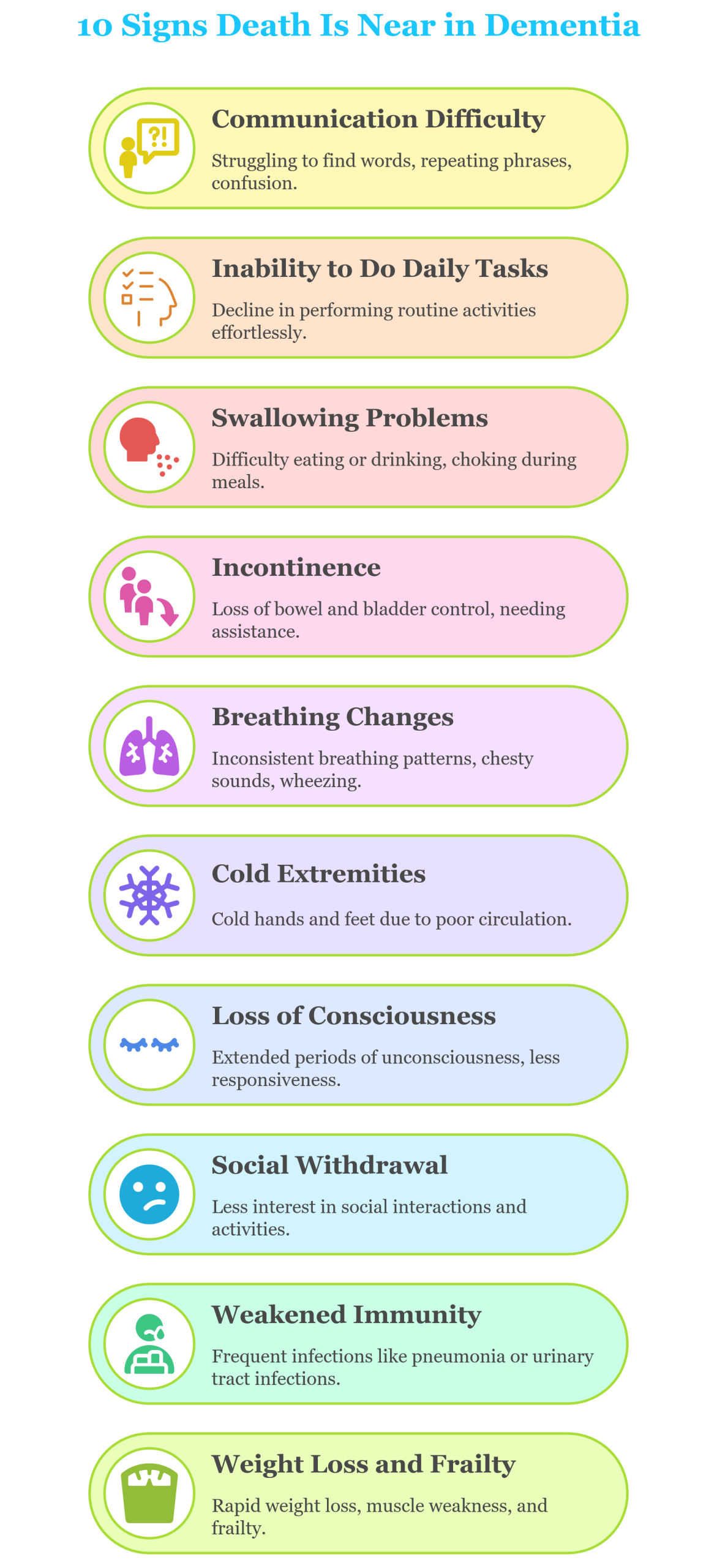
Ten Key Indicators: What to Observe
As dementia progresses, physical and behavioral changes can signal that death is approaching. Being aware of these signs helps you prepare yourself and your loved one for what's ahead. These changes usually develop gradually over days or weeks, rather than appearing all at once.
Increased sleep is a common sign, as the body conserves energy. Your loved one may sleep for longer periods and become more difficult to arouse. However, increased sleep can also be a side effect of medication or a symptom of depression, so it's important to consider other possibilities.
A decreased appetite and thirst is typical as the body slows down and requires less sustenance. The person may lose interest in food and fluids. Don’t force them to eat or drink, as this can cause discomfort. Suncrest Hospice notes this is a natural part of the process.
Withdrawal from activity often accompanies these physical changes. They may become less interested in social interaction or hobbies. This isn’t a rejection of you; it’s a sign of their body shutting down.
Increased confusion and disorientation are common. They may struggle to recognize familiar faces or places, and their thoughts may become fragmented. This can be distressing for both the person and the caregiver.
Difficulty speaking may manifest as slurred speech, a reduced vocabulary, or an inability to form coherent sentences. Communication becomes challenging, and non-verbal cues become more important.
Physical weakness increases. They may become bedridden and require assistance with all aspects of daily living. Muscle mass diminishes, and they may lose the ability to move their limbs independently.
Changes in breathing are often noticeable, including periods of rapid breathing, shallow breaths, or pauses. This can be frightening to witness, but it’s a natural part of the dying process. The Alzheimer's Society notes these breathing patterns can become irregular.
Bowel and bladder changes are common. They may experience incontinence or constipation due to a loss of muscle control and decreased awareness.
Restlessness and agitation can occur, even in those who were previously calm. They may fidget, pace, or become easily upset due to discomfort, fear, or confusion.
Skin changes such as coolness and discoloration, particularly in the extremities, are frequently observed. This is due to reduced circulation as the body prepares to shut down.
Changes in Sleep and Wakefulness
Dramatic shifts in sleep patterns often signal that a loved one with dementia is nearing the end of life. They may sleep for increasingly long periods, sometimes 70-80% of the day, and become less responsive when awake. This differs from earlier sleep disturbances in dementia, which often involved nighttime wandering or agitation.
This increased sleepiness is largely because the body conserves energy as its systems shut down. However, consider other potential causes, such as medication side effects or underlying medical conditions. Periods of wakefulness may be interspersed with long sleeps, and these awakenings can sometimes signal discomfort, anxiety, or a need for assistance.
It's easy to mistake this increased sleep for just being "tired," but recognize it within the context of other changes. Pay attention to their overall responsiveness and any accompanying symptoms. If you're concerned, always consult their doctor.
Appetite and Hydration: A Gradual Decline
As the body prepares for the final stage of life, the need for food and fluids naturally decreases. The body is slowing down and requires less sustenance. It's common for individuals with end-stage dementia to lose interest in eating and drinking, and attempting to force them can cause discomfort and distress.
Offer small, frequent meals of comfort foods that are easy to swallow. Pureed foods, soups, and smoothies can be good options. Ensuring adequate hydration is also important, but don’t force fluids. Sips of water or juice throughout the day may be more tolerable than large amounts at once.
The question of artificial nutrition and hydration (feeding tubes, IV fluids) often arises. This is a complex ethical decision with no easy answers. Discuss your loved one’s wishes (if known) with their doctor and family, and carefully weigh the potential benefits and burdens of these interventions. Crossroads Hospice emphasizes this should be a collaborative process.
- Offer small, frequent meals.
- Focus on comfort foods.
- Ensure adequate hydration (even if it's just sips).
Communication Breakdown: Beyond Words
Verbal communication often diminishes significantly in the final stages of dementia. They may struggle to find words, their speech may
It’s during this time that non-verbal communication becomes even more crucial. Touch, eye contact, a gentle smile, and simply being present can convey love, reassurance, and support. Pay attention to their body language and facial expressions – these can offer valuable clues about their feelings and needs.
Continue to talk to them, even if they don’t respond. Read to them, play their favorite music, or simply sit quietly by their side. Your presence is a powerful form of communication, and it can provide comfort and connection even when words fail.
Physical Changes: Weakness and Discomfort
A progressive decline in physical abilities is a hallmark of end-stage dementia. Increasing weakness, loss of mobility, and difficulty with coordination are common. They may become bedridden and require assistance with all aspects of daily living, including bathing, dressing, and eating.
It’s crucial to prioritize their comfort and manage any pain or discomfort they may be experiencing. Common sources of discomfort include pressure sores, constipation, and muscle spasms. Work with their doctor to develop a pain management plan that addresses their specific needs. Advocate for their comfort and ensure they receive the appropriate medications and therapies.
Changes in breathing patterns, such as Cheyne-Stokes respiration (characterized by periods of rapid breathing followed by pauses), are also common. This can be alarming to witness, but it’s a natural part of the dying process. Ensure the room is well-ventilated and that they are positioned comfortably to ease their breathing.
Bowel and Bladder Function: What to Expect
Changes in bowel and bladder control are frequently observed in the final stages of dementia. These changes are due to a loss of muscle control, decreased awareness of bodily sensations, and the effects of the disease on the nervous system. They may experience incontinence (leakage of urine or stool) or constipation.
Maintaining dignity and hygiene is paramount. Provide gentle and respectful assistance with toileting and cleaning. Use absorbent pads and protective clothing to manage incontinence. Ensure the environment is clean and odor-free.
This is a sensitive topic, and it’s important to approach it with empathy and respect. Remember that your loved one is not intentionally causing these changes, and they may feel embarrassed or ashamed. Offer reassurance and support, and focus on maintaining their comfort and dignity.
Restlessness and Agitation: Finding Peace
Restlessness, agitation, and sundowning (increased confusion and anxiety in the late afternoon and evening) are common experiences in end-stage dementia. These behaviors can be caused by a variety of factors, including discomfort, fear, confusion, and unmet needs.
Creating a calm and safe environment is essential. Minimize noise and distractions, provide adequate lighting, and ensure the room is a comfortable temperature. Offer reassurance and gentle touch. Try to identify and address any underlying causes of their distress.
If the restlessness and agitation are severe or persistent, consult with their doctor. They may be able to prescribe medications to help manage these behaviors. It's important to create a peaceful atmosphere and prioritize their comfort in these final moments.




No comments yet. Be the first to share your thoughts!