
7 Navigating the 7 Stages of Lewy Body Dementia: A Caregiver’s Roadmap
Lewy body dementia unfolds differently for everyone, so view these stages as flexible guides rather than strict deadlines. This roadmap focuses on practical, compassionate steps to support your loved one through each phase of the journey.
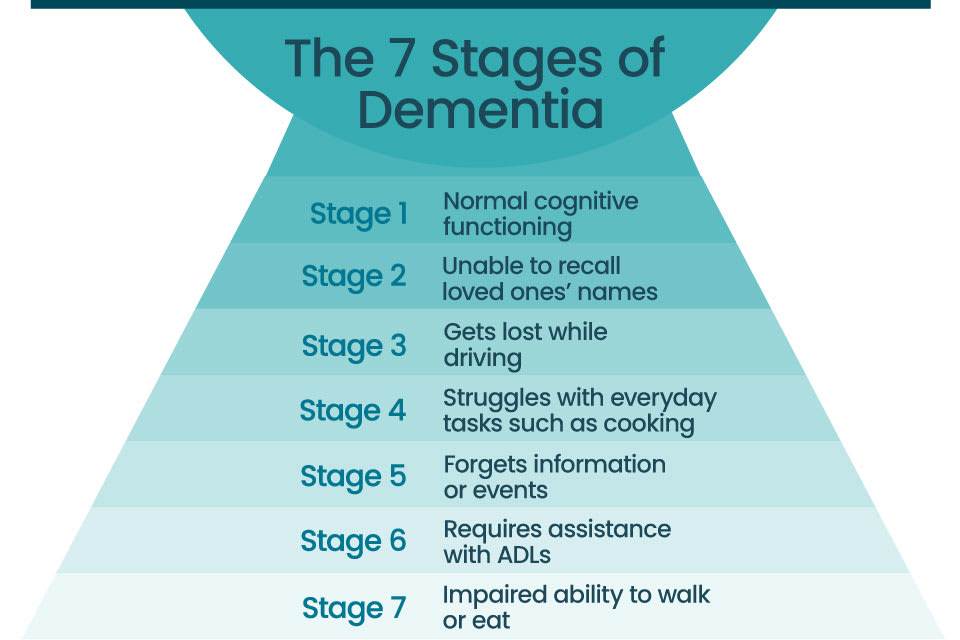
There are no outward signs of cognitive decline yet. This is the time to learn about Lewy body dementia and identify a care team. You might not need daily assistance, but staying active and maintaining social connections helps build resilience. Keep an eye on sleep patterns, as REM sleep behavior disorder can be an early signal.
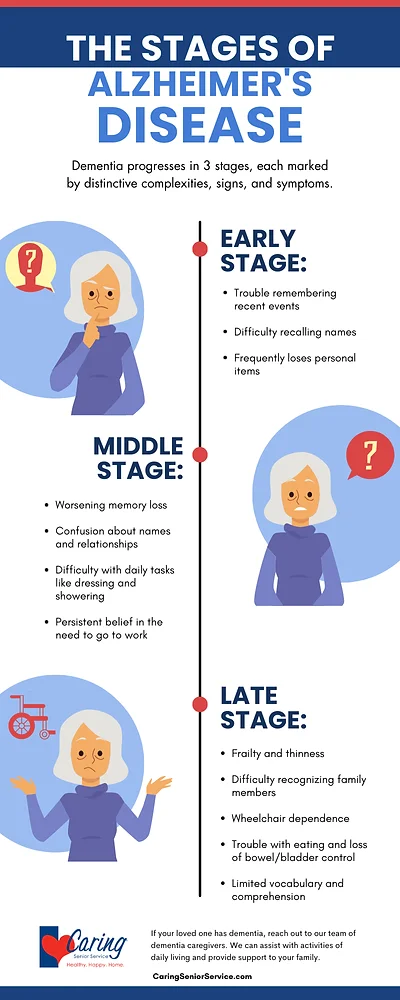
Minor memory lapses may appear, such as forgetting names or misplaced items. These issues are often subtle and might be mistaken for normal aging. Encourage your loved one to keep a simple calendar or notebook for reminders. Continue regular medical check-ups to monitor any emerging symptoms like mood changes or sleep disturbances.

Cognitive difficulties become more noticeable. You might see trouble with complex tasks like managing finances or following a recipe. Memory loss affects recent events more than distant ones. Establish a consistent daily routine to reduce confusion. Simple changes, like labeling drawers or keeping keys in one spot, can make a big difference in reducing frustration.

Clear cognitive deficits emerge. Your loved one may struggle with basic math, get lost in familiar places, or have trouble recognizing family members. Hallucinations or delusions often start here. Stay calm and don’t argue with false beliefs; instead, redirect their attention to a comforting activity. Supervision becomes necessary for safety, especially around driving or using appliances.
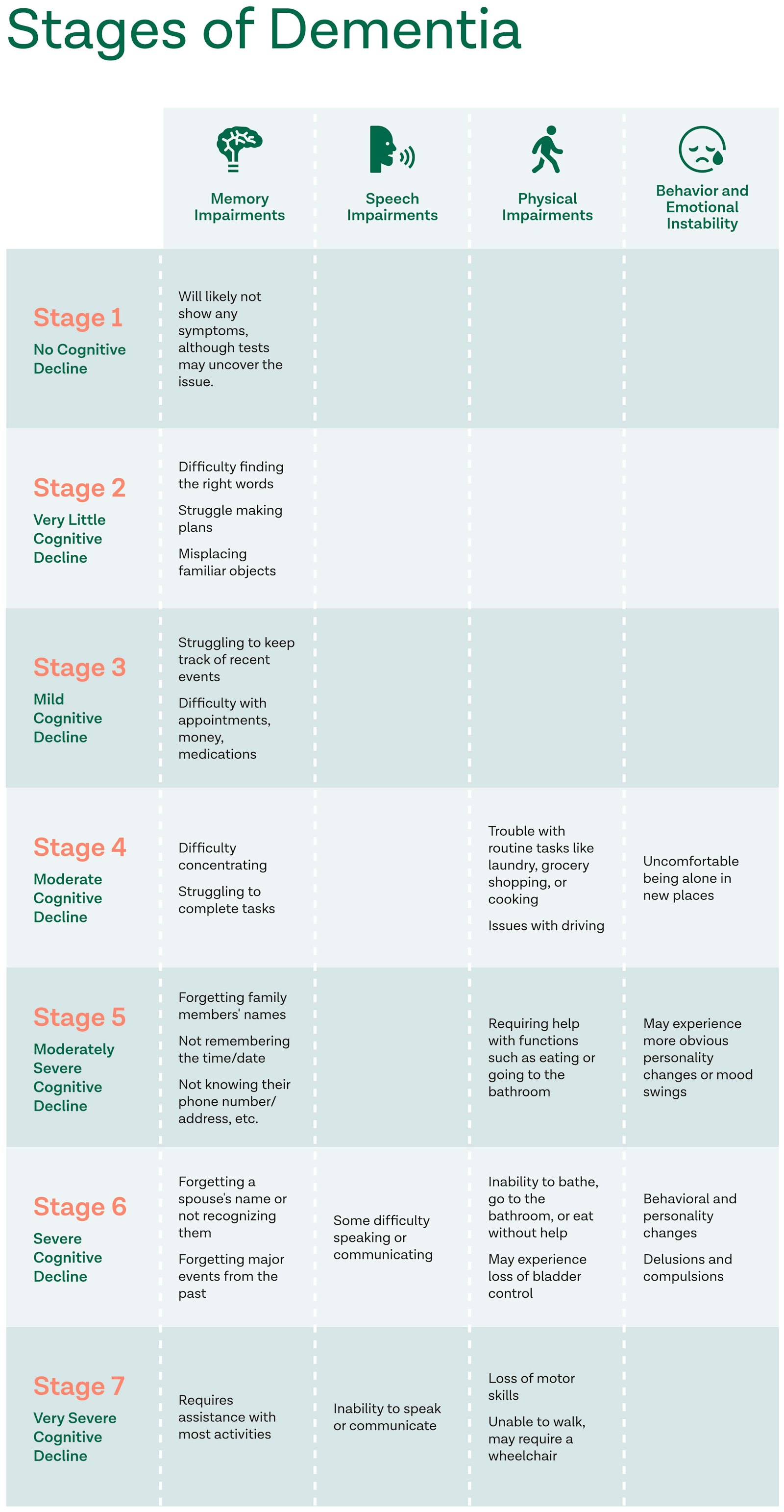
Gaps in memory are significant, and assistance is needed with daily activities. Your loved one may forget their address or phone number. Focus on maintaining independence as long as possible. Break tasks into small, manageable steps. Offer choices rather than open-ended questions to reduce anxiety. Emotional support and gentle reassurance are vital during this phase.
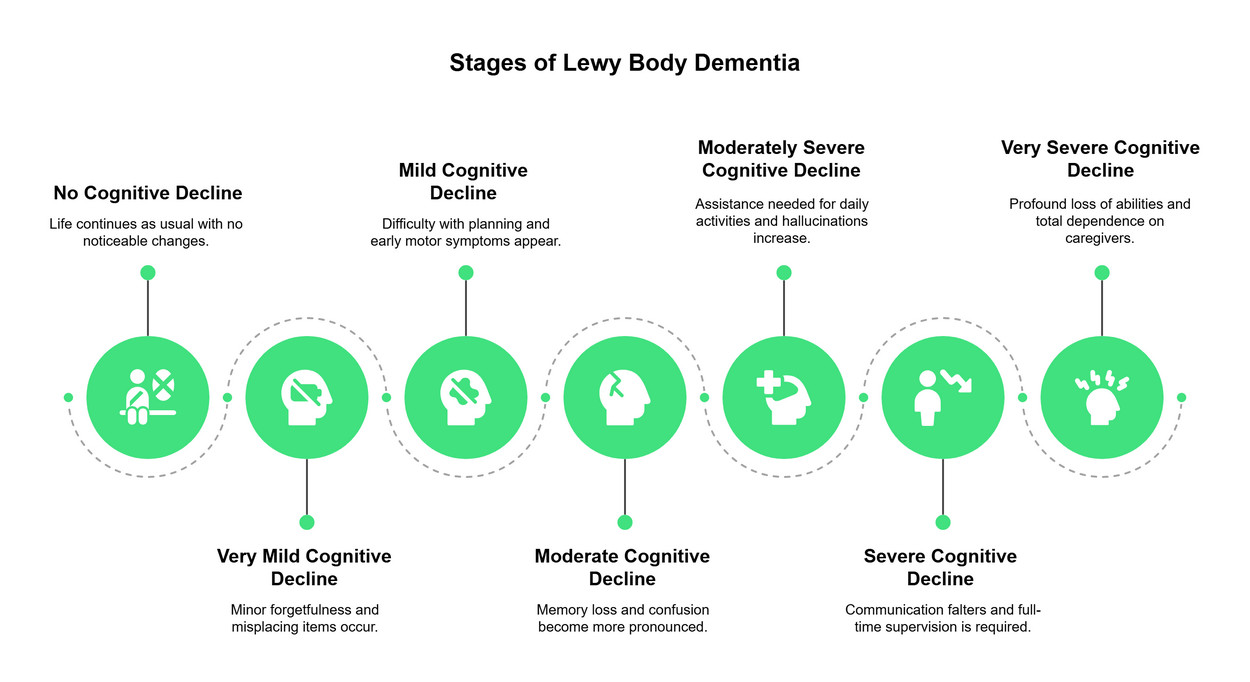
Loss of verbal skills and significant personality changes occur. Your loved one may need help with dressing, bathing, and eating. Incontinence is common. Prioritize physical comfort and skin care. Use simple, clear language and non-verbal cues like touch to communicate. Music and familiar scents can sometimes provide comfort when words fail. Plan for 24-hour care needs.
Loss of basic physical abilities, such as walking and smiling. Communication is minimal. Care focuses entirely on comfort, dignity, and pain management. Regularly review medication goals with the doctor to avoid overmedication. Gentle touch, soft music, and a calm environment are the most important tools. This is a time for presence rather than correction.
Why LBD Stages Feel Different
Lewy Body Dementia (LBD) does not follow the steady, predictable decline often seen in Alzheimer’s. Instead, LBD progression is often described as "step-wise." This means a person might maintain a certain level of function for months, then experience a sudden shift in symptoms before stabilizing again at a new, lower baseline.
This variability makes the seven-stage model a guideline rather than a rigid timeline. Some days may be better than others, and symptoms can fluctuate due to medication changes, infections, or environmental factors. Unlike Alzheimer’s, which typically moves through a linear path of memory loss, LBD affects thinking, movement, and sleep in unpredictable waves.
Because of this unpredictability, it is helpful to focus on current care needs rather than worrying about which "stage" you are in. Recognizing that ups and downs are part of the disease process can reduce anxiety and help you adjust support strategies as symptoms change.
Care strategies for each phase
Lewy body dementia moves differently for everyone. Some people stay in the early stages for years, while others progress more quickly. Think of the seven stages as a map rather than a strict schedule. You can’t predict the exact mileage, but you can prepare for the terrain ahead. The goal is to match your care approach to where your loved one is right now, focusing on comfort, safety, and dignity.
A printable checklist can help you track symptoms and care needs across these stages. Since LBD is unpredictable, use it as a flexible guide rather than a rigid to-do list. Focus on what brings peace and comfort to your loved one each day.
Frequently asked questions about Lewy body dementia stages
Understanding how Lewy body dementia (LBD) progresses can help you prepare for the changes ahead. While the seven-stage model provides a useful roadmap, every person’s journey is unique. Some symptoms may appear earlier or later, and the pace of progression varies widely from person to person.
Below are answers to common questions about navigating these stages, focusing on practical care strategies rather than just medical definitions.

No comments yet. Be the first to share your thoughts!